
This article was originally published as part of Impact’s Year in Review 2025 publication in January 2026. Written by Ishka Senior Analyst and Sustainability Lead Eduardo Mariz with questions by the Impact reporting workstream. Ishka is a founding member of Impact on Sustainable Aviation. For more information on Impact (Initiative to Measure and Promote Aviation’s Carbon-free Transition e. V.), please visit: impact-on-sustainable-aviation.org
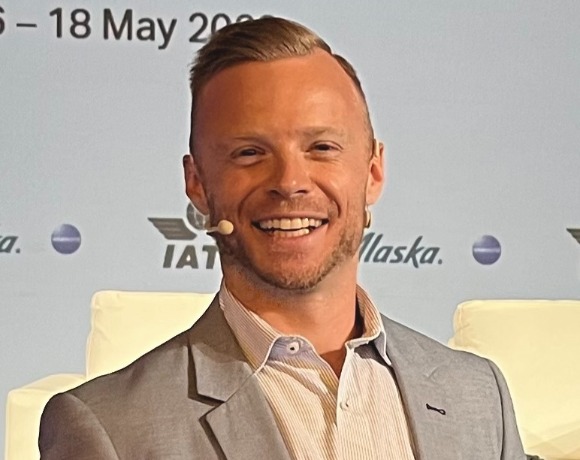
As advanced SAF pathways further progress toward global deployment, building durable feedstock supply chains and opening new regional markets has become essential. For Daniel Bloch, Director of Strategic Partnerships at LanzaJet, this means building collaborative ecosystems and alliances that share risk, unlock domestic advantages, and create new sources of value. After two years with IATA, Bloch joined LanzaJet in 2024 to accelerate such partnerships. In this interview with Impact, he outlines how LanzaJet approaches geographic expansion, why strong supply-chain collaboration matters, and how SAF’s value proposition could extend well beyond emission reductions.
The flexibility of AtJ
LanzaJet’s patented Alcohol-to-Jet (AtJ) process is designed to produce second-generation SAF, with a view toward global scalability. Besides developing its own projects, the firm has technology partnerships with project developers around the world, seeking to produce SAF from a variety of local feedstocks.
“Ethanol is a very flexible molecule; it can be created from effectively any non-oil-based carbon waste stream, both biogenic and also synthetic […] we really set ourselves up for global replicability and scalability,” Bloch explains.
While ethanol is often associated with sugarcane from Brazil or corn from the US, the company emphasizes that fermentation feedstocks extend far beyond raw commodities, encompassing wastes, residues, and low-value by-products from those crops, alongside a wide variety of other industrial-scale waste streams. “Ethanol exists in different forms, from different feedstocks, all around the world; the idea is to go in and really tailor ourselves to the local conditions and industries.”
This includes exploring new bio-fermentation and gas-fermentation pathways for underutilized or unidentified feedstocks, in an effort to push the boundaries of known SAF feedstock potential. But as Bloch acknowledges, innovation brings risk. “It’s tough when we have to address them all, you can’t address all layers of risk alone. We can only do that by bringing in strategic partners to take proportions of that risk,” he adds, giving the example of British Airways, an investor in the company, as well as an offtaker.
Revenue from biological benefits
A unique advantage of advanced SAF pathways, such as AtJ, Bloch says, is the potential to generate value streams beyond CO₂ reductions. “I'm finding that in the world of finance and big corporate institutions, they're starting to become attuned to this idea that ecosystem services and natural capital are directly tied to their bottom lines and financial performance - and that supply chains which improve these indicators hold emerging economic value,” he explains.
Like most SAF market observers, Bloch believes that a pivotal point for advanced SAF pathways will be reached when technologies become more widespread and commercially competitive. To that effect, he argues that the feedstock production activities associated with advanced SAF pathways, especially those from the aggregation of waste streams or regenerative agriculture, can deliver measurable, reportable natural-capital appreciation across the likes of
- Soil health and productivity gains
- Soil organic carbon improvements
- Water quality enhancements
- Natural waterway restoration
- Reduced nitrate and phosphate runoff
- Habitat restoration
- Biodiversity uplift
“These are not just co-benefits,” he notes. “They can be materially valuable and monetisable, linked to growing corporate awareness around their dependency on ecosystem services. SAF can recognize the natural-capital appreciation that its supply chains enable and financially underwrite. You could then bundle these nature-based attributes into a stacked, high-integrity SAF, or separate the nature claim out and sell them as its own distinct instrument,” he conceives.
Not losing track of the progress so far
SAF discussions often oscillate between high expectations and hard realities. But when asked how the sector can move faster, Bloch recommended maintaining perspective.
“Take a step back for a moment. Over the last five or six years, you can see that SAF volumes have scaled 100-fold, and that sees it outpacing the early trajectories of other renewable fuels, including wind and solar […] and we’re only three years removed from ICAO committing to the UN’s Long-Term Aspirational Goal (LTAG),” he says, referring to the UN’s net-zero by 2050 goal for aviation.
Nevertheless, he acknowledges that the SAF market will need to move beyond the feedstockconstrained HEFA pathway, into greenfield facilities and advanced technologies like AtJ, Fischer–Tropsch (FT), and others like Hydrothermal Liquefaction (HtL) and Pyrolysis. “We need real, carved-out policies that are specifically designed to help enable these next-in-kind technologies.”
Among those policies, Bloch notes that those seeking to help support projects forward through their financing journey are key. “Clearly, there’s a big role for governments to help bridge the mezzanine finance part […] that point between the early development stages and project finance, when you're trying to finance the design or the detailed engineering of a facility, that's often really tricky,” he highlights, pointing to the UK’s Advanced Fuel Fund (AFF) as a good example.
He is hopeful that other governments will take on board industry feedback and develop mechanisms to address this and other financial gaps. Reflecting on the SAF policy leadership to date in Europe, the UK, and the US, Bloch sees “a trickle-down effect to the next-in-line markets,” such as Australia, Japan, Singapore, India, and South Korea, with the investment outlook for SAF gradually improving.
What draws LanzaJet to certain geographies
“I don’t think you can ever really assess the viability of SAF in a vacuum […] in very few cases do we have a really strong local SAF production market, coupled with a defined local consumption market,” Bloch reflects on the importance of conducive SAF policy.
On its website, LanzaJet currently lists projects in the U.S. (Freedom Pines, in operation), the U.K. (with Project Speedbird, in collaboration with British Airways), as well as other projects in Australia (Project Ulysses, led by Jet Zero), India (in joint-venture with Indian Oil Corporation), Japan (led by Cosmo Oil) and Kazakhstan (led by KazMunaiGas).
Among the key considerations for embarking on projects in new geographies are the availability of pre-construction finance (a challenge for non-HEFA players without an existing facility to retrofit), compliant feedstocks, and utilities - the latter two being crucial in determining the end product’s ability to succeed in its intended market. “You might have a plethora of a given type of feedstock, but if it's not compatible with the intended consumption market […] it might render the exercise entirely worthless.” Other key elements include export infrastructure readiness and local demand policy.
“We're probably yet to see a sweet spot where you have an amazing production market and consumption market interoperating at the same time, in the one location. I think India could be one that stands out in that regard, in the foreseeable future,” he hints.
The value of partnerships
As Director of Strategic Partnerships, Bloch interacts with a wide range of stakeholders - from airlines and corporates looking to invest in SAF, project developers pursuing new facilities, financiers seeking to provide capital, governments exploring policy support, right the way through to the farmers providing the necessary feedstocks. It is an uncharted task for which he feels his past work at IATA (two years spent as their SAF Specialist) has prepared him well.
“My time at IATA gave me a distinct appreciation for the complexity of building a global system, let alone a global system that tries to accept a profoundly new, different approach to energy,” he explains.
In navigating this, he emphasises the importance of “hyper-regionalising” activities, ensuring that as new SAF ecosystems are built up, they gain buy-in from a broad range of domestic stakeholders, from “farmers and growers or the municipalities dealing with a waste issue,” and building up from there. “I think we make ourselves more relevant as an industry if we attach ourselves to more issues, to more stakeholders, if we make it more regionally focused."