
in Lessors & Asset managers , Airline trends & analysis , Capital Markets , Aviation Banks and Lenders
Tuesday 24 March 2026

Ishka London: Deals still going ahead but if Iran conflict continues ‘everything changes’

Traders and banks say deals are continuing as normal but several have warned that if the Iran conflict continues then it would begin to disrupt the aviation finance market. One senior asset manager shared that if the conflict continues then “everything changes” for airline profitability. "It is about the duration," reflected the lessor.
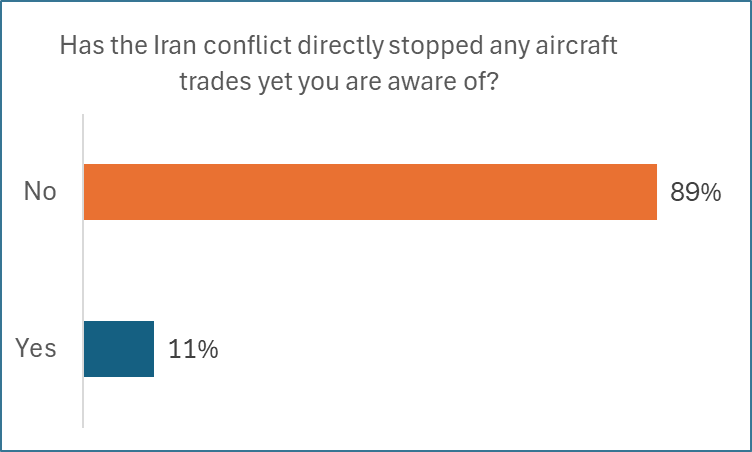
An audience poll showed that the vast majority of aircraft traders had not seen any impact on aircraft trading yet due to the ongoing Iran conflict (see below), but a trader talking to Ishka stated he was “not surprised by the result of the poll”.
“No, I am not surprised. We are still really early in this crisis. No one knows if this is over in two weeks or much much longer. It has been hard to get exposure to the Middle East carriers as they have been desirable airline credits, so the direct exposure to these carriers varies from lessor to lessor. If this crisis continues, then yes everyone suffers, but if oil prices remain high you are looking at big inflationary pressures and even the risk of a potential recession. That will impact airlines.”
One panellist speaking at the conference explained that there were signs that the Iran crisis could extend: “This is an uncharted territory… this is a geopolitical war [that] is harder to resolve. I think they're going to be entrenched for a period of time, and it could take longer."
Another panellist agreed, stating there more traders could adopt “a wait and see” approach to deals if the current conflict persists.
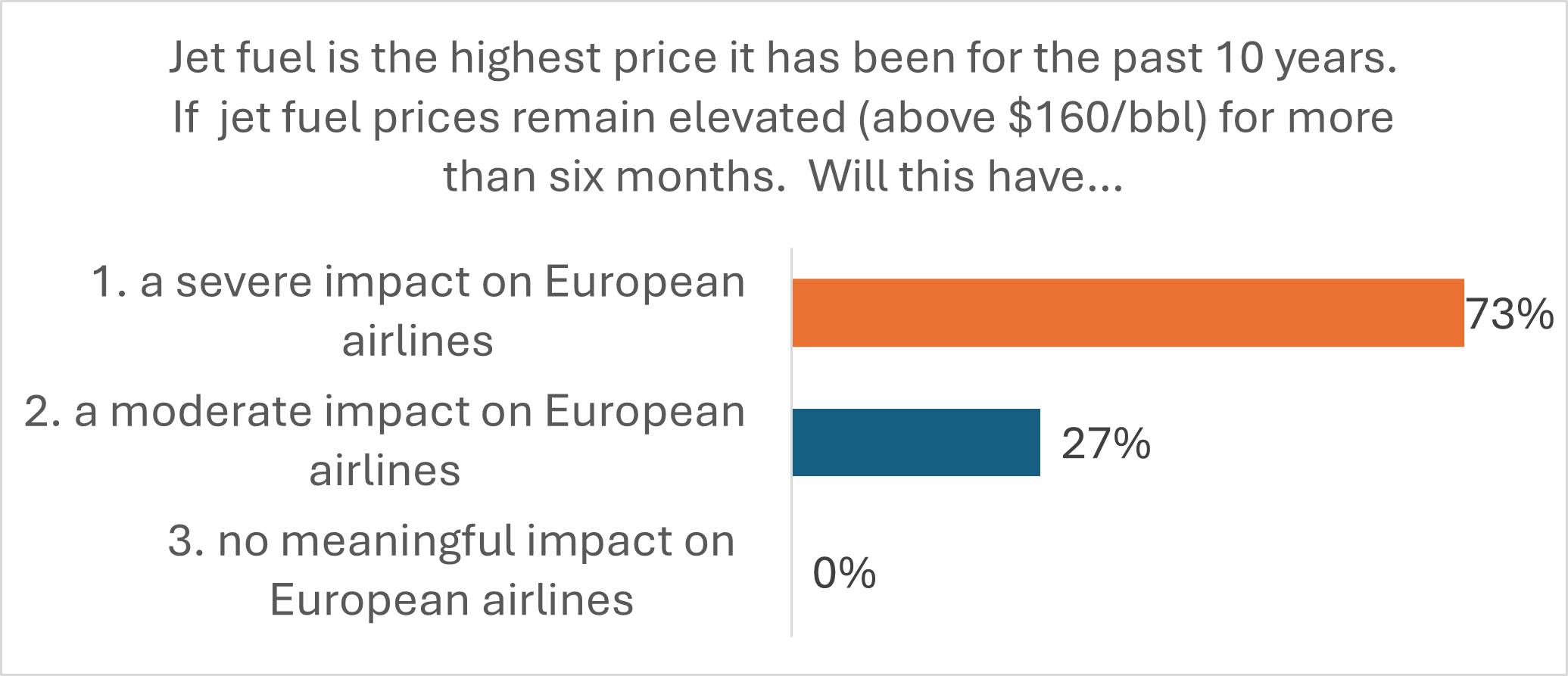
A separate audience poll appears to reflect this risk (see below). The common refrain among lenders and lessors, when asked about the Iran conflict - is that it depends on duration. While some airlines have fuel hedges, and a certain amount of capital buffers, sources and airlines state that as fuel prices increase carriers might need to start to decrease passenger traffic, even on routes with no Middle East exposure, because of the increased costs.
Airlines reflected that the Iran conflict would add revenue stress and new costs, but stressed that many carriers today are already shouldering the pain of a number of increasing operational costs, including MRO costs, as well as higher escalation costs from the OEMs for both new aircraft as well as parts. “This is a huge threat to the industry,” explained one airline CEO, reflecting on the costs that aircraft manufacturers can impose to airline customers for a range of parts costs.
The Ishka View
Airlines profit margins are vulnerable to these types of crises. The Iran conflict will dramatically increase operational costs either as existing fuel hedges expire, or as airlines are forced to use higher fuel prices immediately. Many airlines are threatening or planning to cancel flights due to concerns about jet fuel stores.
Many of the Middle Eastern carriers, seen as vital conduits to their respective economies, are protected by the considerable state support made available to them. But the ripple waves of high fuel prices will be felt across the industry. Many traders are looking at some of the weaker carriers and assessing their ability to withstand a sustained hike in fuel costs. Privately, one senior sources state that aviation banks are seeking to either syndicate some of the risk on certain new deals or get some form of insurance wrap. “No one is panicking but lenders are looking at how they can start to mitigate some of the risk.”




Sign in to post a comment. If you don't have an account register here.