
in Lessors & Asset managers , Other , Aviation Banks and Lenders
Wednesday 1 April 2026

Doric’s MD discusses aircraft sales as firm exits aviation
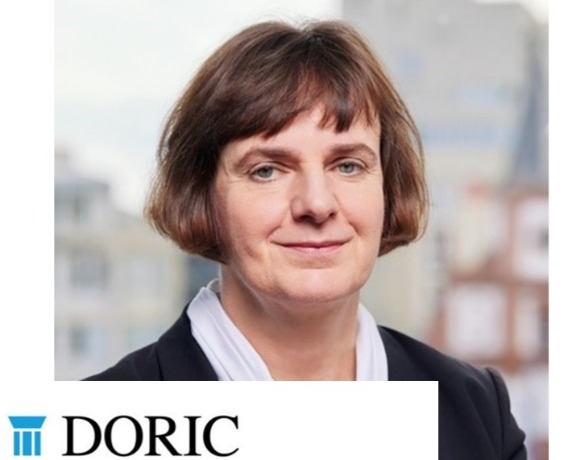
Doric is preparing to sell the remaining aircraft in its portfolio as part of a gradual exit from aviation asset management. At one point the firm managed one of the largest Airbus A380 portfolios in the world, accessing retail and institutional investors across a variety of European fund structures including KG funds, UK AIM-listed funds, a Luxembourg fund, as well as private family office mandates. The firm has sold all of its A380s but still manages around 12 aircraft, including three Airbus A330s, one Boeing 777, one Boeing 787-9, one Airbus A320 and six ATR turboprops.
Ishka speaks with Sibylle Paehler, Doric’s Managing Director and co-founder, about the firm’s plans to exit aviation and how it plans to dispose of its remaining portfolio.
Ishka: Doric is winding down its aviation portfolio and selling all of its aircraft. Why do this now?
Paehler: “Everybody is somehow making a little bit of fuss about it, but I’m not sure it should. What we are really doing is what we always said we would do. We have lived through that initial long-term lease, we have repaid the debt, and now it’s time to look at what the metal is worth. If you look at the market today, if you can’t make anything out of it now, when would it ever be possible?”
“We were always very focused on widebody aircraft, and the A330 took a deep dive during corona, especially when the Asian markets were closed. But since then it has recouped dramatically. That’s exactly the situation where it makes sense to show investors that after 18 years of holding an aircraft you can now cash in.”
Ishka: How large is the portfolio you are currently selling?
Paehler: “We have about eleven aircraft across different portfolios, but we are not putting everything on the market at the same time. “It’s an organised process with several steps. We focus on the aircraft which are most marketable at this stage in the market, and then we move to the next ones depending on lease positions and what the investors want to do.
Selling down the A330 portfolio is our utmost and foremost goal. After that comes the 777s, and then the ATR portfolio. The ATRs I would argue are more for next year. We don’t want to be pressurised in any fashion or form on any of those transactions. Because all the aircraft are debt-free, we have the flexibility to move step by step.”
Those widebody aircraft are on our top list because the market there is strongest at the moment. We want to materialise as much cash as possible from those first.”
Ishka: What financing structures sit behind the aircraft?
Paehler: “The A330 portfolio is held in a public Luxembourg-listed entity. Anyone can check it out on the Luxembourg Stock Exchange because it’s a publicly listed vehicle. The 777s sits in a German retail fund structure - a classic aviation KG fund. And then the ATR portfolio is something quite different. Those aircraft are backed by family offices. Because ATRs are smaller assets from an investment perspective, it was easier to slice and dice that for family office investors rather than create a public structure.”
Ishka: What timelines are you working to for the A330 sale?
Paehler: “The hard deadline for the A330 portfolio is May 2027. I would argue that’s a deadline which should be easily achievable. But our goal is to finish the sales process much earlier, ideally by the beginning of next year. That’s what we are aiming for.
You have to be careful with aircraft sales today, though. Sales processes are not the same as they were in the past. When you are dealing with aviation asset managers backed by private equity capital, things can take time. You never know a sale is really completed until the closing happens. Most of the aircraft remain on lease, and that obviously plays into how we manage the process.”
What we see a lot nowadays is that airlines don’t want to be exposed to further discussions. They prefer to have control of their assets themselves, so sometimes they become buyers. If you look at the A330 portfolio specifically, one of the airlines involved was Hawaiian, which is merging with Alaska, and another was Asiana, which is merging with Korean. In both cases you see very positive fleet activity. That’s quite amazing and very encouraging from a demand perspective.”
The Ishka View
Doric’s gradual exit from aviation matches the final repayment of many of its structured aircraft investment vehicles from the late 2000s. Many of those funds were built around long-term leases to major airlines, with the expectation that aircraft would be sold once the financing was repaid. A380s formed the bulk of the Doric portfolio and the lessor is synonymous with the asset type despite the fact it now no longer owns or manages any A380s. Several were sold to Emirates, or scrapped for teardown, with A380 values swinging wildly immediately before, and after the Covid crisis. The A380 was ultimately a difficult asset to sell into the investor retail market, partly because of its size and the natural lack of diversification of selling a single asset in a structured vehicle, and because the OEM stopped the programme. Ironically, this has since boosted the value of the remaining A380s which were being operated heavily by Emirates especially as the replacement 777Xs are still some way off. Lesha Bank acquired recently six Airbus A380s as part of a 12 widebody portfolio when it acquired Amedeo Air Four Plus (AA4+) (see Insight).




Sign in to post a comment. If you don't have an account register here.